
Place AI inside an owned workflow with evaluation, review, correction, and fallback.
The proof asks what the model may assist, what it may never decide, and who owns every accepted output.
Read implementation story
TSmithCode.ai places AI inside defined operating workflows with approved context, deterministic checks, human review, correction, observability, cost controls, and a non-AI fallback.
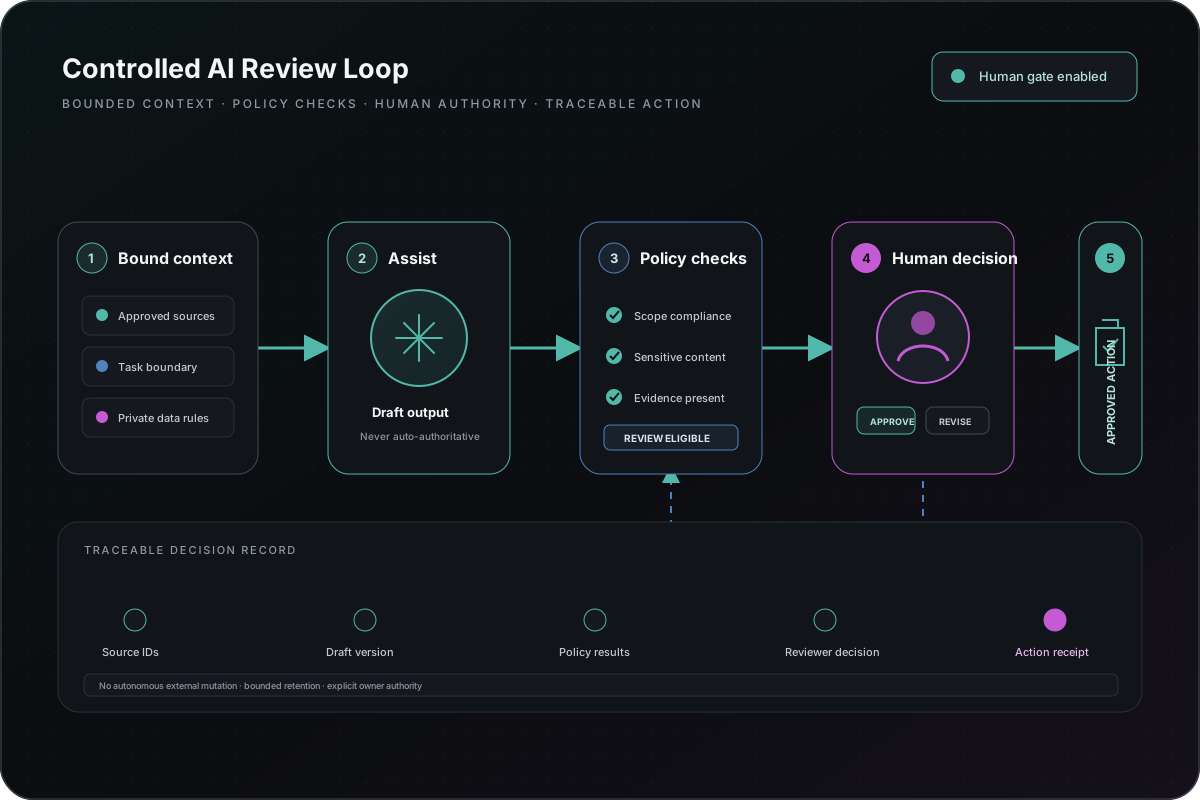
Probabilistic output stays inside a bounded review loop with evaluation, correction, fallback, privacy, and cost controls.
Generated output becomes operational risk when the source data, allowed decisions, review owner, confidence threshold, validation checks, exception path, and fallback behavior are not explicit. The workflow boundary matters more than model novelty.
The engagement defines the task, source data, prohibited data, deterministic rules, generated output, reviewer decision, acceptance set, error handling, logging, and manual fallback before selecting a model or orchestration pattern.
Public demonstrations use generalized or synthetic inputs and disclose the workflow boundary. Private prompts, records, customer data, credentials, model-provider configuration, and production outcomes remain outside the public surface.
Describe the inputs, expected output, current review effort, sensitive-data limits, representative cases, unacceptable failures, and fallback process.