
Place AI inside an owned workflow with evaluation, review, correction, and fallback.
The proof asks what the model may assist, what it may never decide, and who owns every accepted output.
Read implementation story
TSmithCode.ai applies language and multimodal models inside defined workflows where inputs, generated output, reviewer responsibility, validation, fallback, privacy, cost, and support can remain visible.
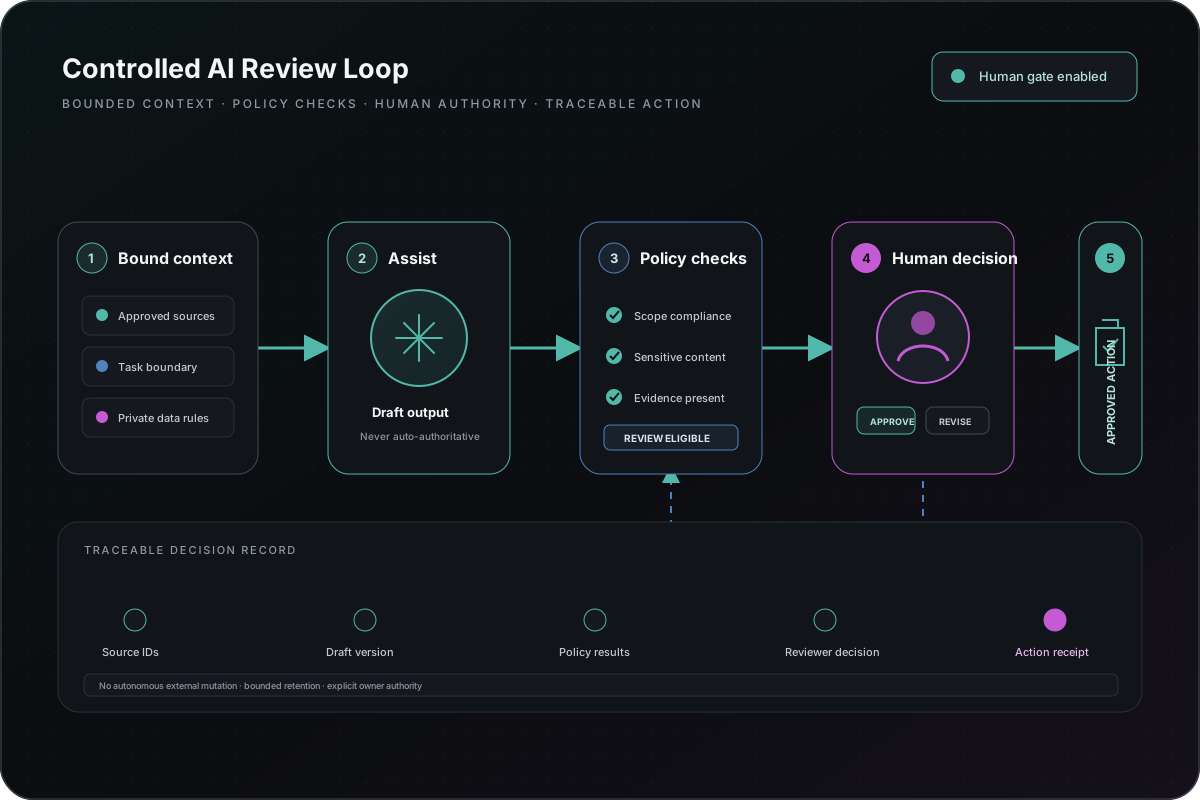
Probabilistic output stays inside a bounded review loop with evaluation, correction, fallback, privacy, and cost controls.
A defensible first use case has defined inputs, expected output, an accountable reviewer, evaluation examples, privacy rules, acceptable error modes, fallback behavior, and a measurable operating reason to automate.
public demonstrations can demonstrate controlled architecture and synthetic or approved fixtures. Production suitability requires representative private data, explicit evaluation, reviewer ownership, privacy review, and ongoing monitoring.
Models can produce incorrect, incomplete, inconsistent, or sensitive output. Suitability depends on task risk, evaluation quality, reviewer capacity, model and vendor terms, privacy constraints, latency, cost, and an effective manual fallback.
Name the users, current behavior, data and integrations, delivery risk, examples available later, and the first decision the engagement should resolve.